


You may also like
-

The afternoon Poster
Henri Matisse · 1941 · Minimalist art print of a reclining figure on a black field
Poster from €9 · Framed from €16
-
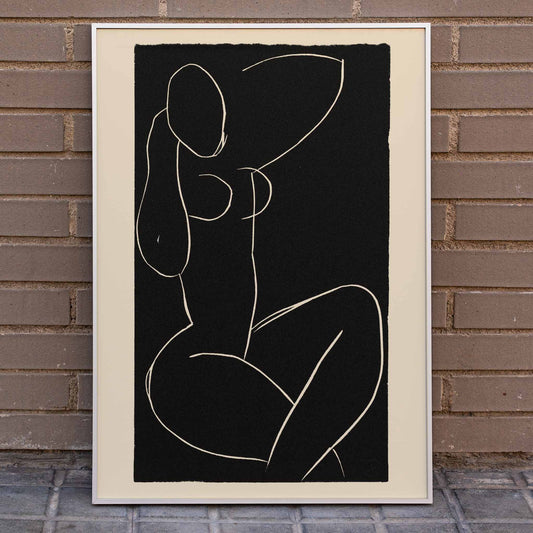
Seated nude with crossed legs I Poster
Henri Matisse · 1941 · Minimalist art print of a seated nude with crossed legs
Poster from €9 · Framed from €16
-

Drowned Poster
Mikuláš Galanda · 1930 · Surreal black-and-white poster merging human fragility with an aquatic fish motif
Poster from €9 · Framed from €16
-

Two figures Poster
Auguste Rodin · 1905 · Intimate figure study poster with fluid linework on warm beige paper
Poster from €9 · Framed from €16


-

"Very nice Posters. The quality is amazing and we received it very quickly !"
-

"A shop to visit absolutely. Huge selection of posters. We spent more than an hour there !"
-

"Perfect to find gift. Price are very good. An they can frame and pack it on site"
About the Artist
Arthur Bowen Davies was an influential American painter and draftsman whose work helped shape early twentieth-century modernism. He played a major role in bringing avant-garde ideas to the United States, notably through his leadership in organizing the 1913 Armory Show. Davies often bridged classical figure traditions with modern simplification, making his images feel both timeless and contemporary.
Collectors interested in modern figure studies may also appreciate our famous artists collection of museum-quality wall art and fine art print reproductions.
The Artwork
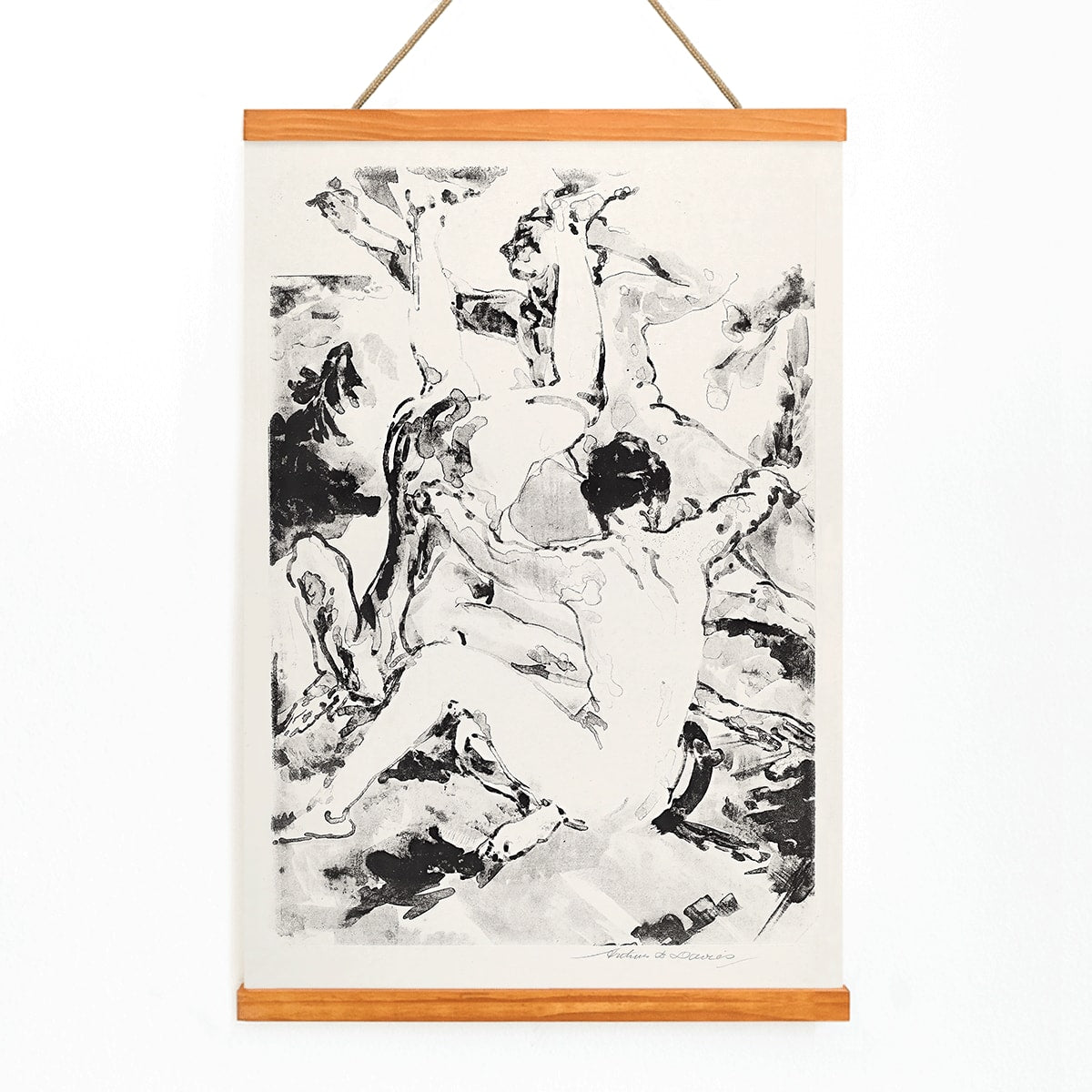
Created in 1920, Three Acrobats reflects the post-World War I fascination with performance and the expressive potential of the human body. During this era, artists frequently turned to circus and stage scenes as metaphors for resilience and transformation, where physical movement became a symbol of adaptation and hope. Davies’s composition highlights the interconnectedness of the performers, suggesting themes of trust, timing, and the delicate balance required in both art and life.
Acrobat imagery was especially resonant in this period, capturing the excitement of new forms of entertainment and the era’s embrace of dynamic, modern life.
Style & Characteristics
The artwork features three stylized acrobats arranged in a compact, harmonious grouping. Executed in a restrained palette of black, white, and grey, the print emphasizes silhouette and contour, with negative space enhancing the sense of suspended motion. The modernist, graphic approach prioritizes rhythm and form over literal detail, resulting in a composition that feels both energetic and serene.
If you appreciate understated wall decor, explore our black and white prints and minimalist posters for similarly refined, impactful designs.
In Interior Design
This Arthur Bowen Davies art print is well suited to living rooms, hallways, or offices where you seek a sense of movement without visual clutter. It complements modern, Scandinavian, and gallery-style interiors, especially when paired with neutral textiles and clean-lined furnishings. The artwork’s clarity ensures it stands out both from afar and up close, serving as a strong focal point in a curated arrangement.
For a polished look, combine it with white walls, warm woods, or concrete greys, and consider a simple mat and frame from our frames collection.