


You may also like
-

Stevenson Memorial Poster
Abbott Handerson Thayer · 1903 · Serene angel art print with soft wings and a contemplative memorial atmosphere
Poster from €9 · Framed from €16
-

Tiger's Head Poster
Abbott Handerson Thayer · 1911 · Expressive tiger head art print with dark stripes and warm brown fur
Poster from €9 · Framed from €16
-

The Bat-Woman Poster
Albert Joseph Pénot · 1890 · Dramatic winged nude art print with batlike cloak and intense chiaroscuro
Poster from €9 · Framed from €16
-

La Guirlande de Julie Poster
Nicolas Robert · 1641 · Romantic cherub and flower garland poster in soft pink and ivory tones
Poster from €9 · Framed from €16


-

"Very nice Posters. The quality is amazing and we received it very quickly !"
-

"A shop to visit absolutely. Huge selection of posters. We spent more than an hour there !"
-

"Perfect to find gift. Price are very good. An they can frame and pack it on site"
About the Artist
Abbott Handerson Thayer was an American painter known for his contributions to late 19th-century realism and a subtle, spiritual Symbolism. He is remembered for his sensitive figure studies and for his pioneering work on the concept of protective coloration, which influenced the development of camouflage in both art and nature studies.
Thayer’s career bridged the worlds of fine art and scientific observation, and his works are often featured in our famous artists collection. His unique blend of technical skill and contemplative subject matter continues to inspire collectors and art historians alike.
The Artwork
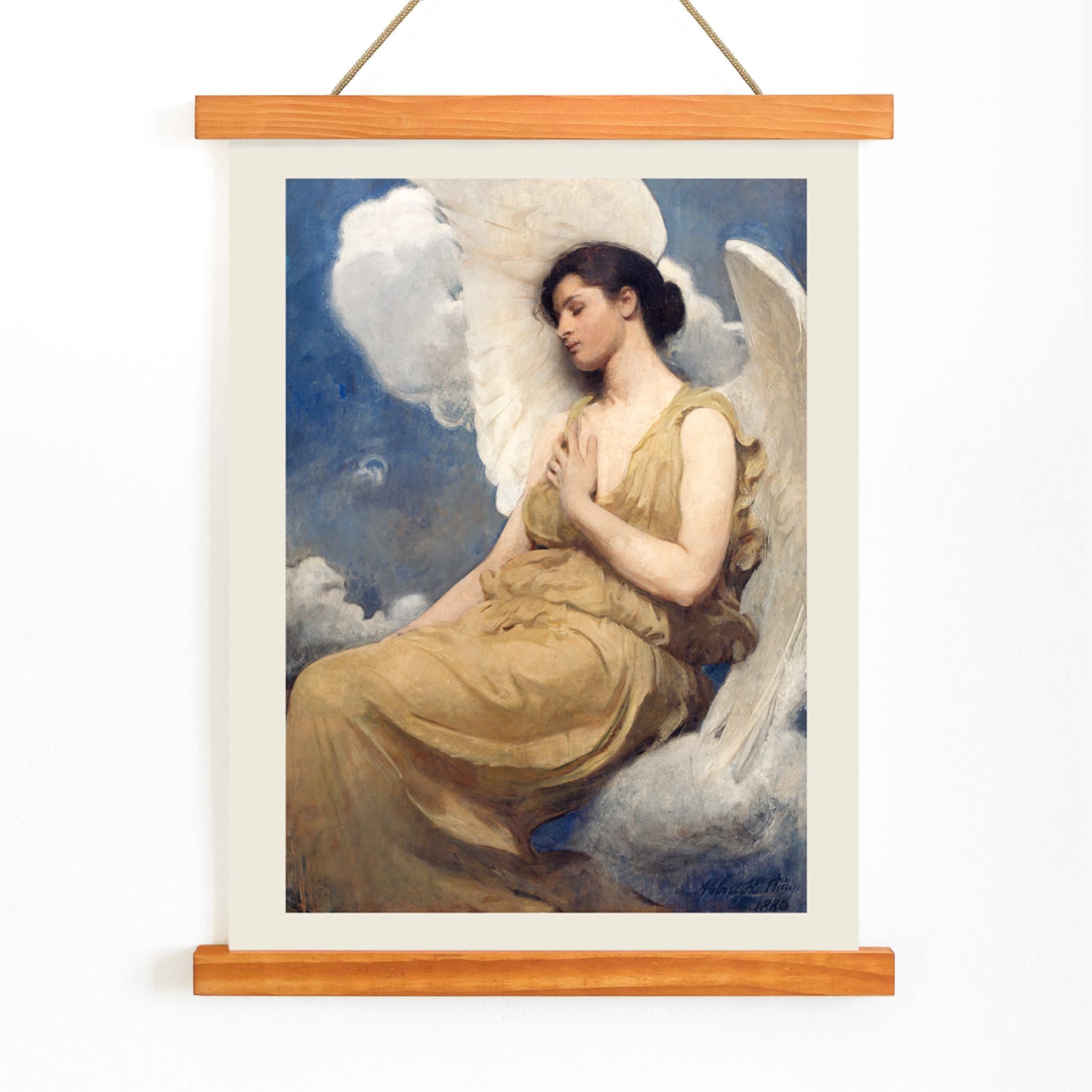
Created in 1889, Winged Figure reflects a moment in American art when spiritual and emotional themes were increasingly woven into portraiture. Rather than depicting a specific story, Thayer’s figure serves as a universal symbol of protection and introspection, inviting viewers to find personal meaning within its quiet presence.
Such imagery resonated with fin-de-siècle audiences seeking solace and beauty in art. The work’s meditative atmosphere made it well-suited for both private contemplation and public exhibition, aligning with the era’s appreciation for allegorical and idealized forms. For those exploring classic art, Thayer’s approach offers a window into the cultural values of his time.
Style & Characteristics
The composition features a solitary winged figure, the wings arching gently to frame the subject and draw focus inward. Thayer employs soft, blended brushwork and avoids harsh outlines, creating a tranquil, almost ethereal effect that enhances the sense of serenity.
The palette is dominated by cool blues and pale whites set against a warm beige background, resulting in a luminous, airy quality. This subtle use of color and light gives the art print a timeless appeal, making it especially attractive to admirers of blue-toned artworks and serene, contemplative imagery.
In Interior Design
This fine art print lends itself beautifully to spaces designed for relaxation and reflection, such as bedrooms, meditation rooms, or elegant entryways. Its gentle mood complements minimalist, Scandinavian, and traditional interiors, providing a calming focal point without overwhelming the space.
Pair it with soft neutrals like ivory, linen, or pale oak, and accent with antique brass or muted blue tones. For a harmonious arrangement, consider displaying it alongside other works from our classic art collection or framing it with selections from our frames range.