


You may also like
-

Avocado Persea Poster
Amanda Almira Newton · 1916 · Refined avocado botanical print with luminous green skins and a softly painted cut fruit
Poster from €9 · Framed from €16
-

Avocado (Persea) Poster
Amanda Almira Newton · 1916 · Detailed avocado botanical print featuring ripe fruit halves and glossy green leaves
Poster from €9 · Framed from €16
-

Avocado (Persea) Poster
Amanda Almira Newton · 1916 · Refined avocado botanical print with green fruit and a cut half revealing the pit
Poster from €9 · Framed from €16
-

Avocado Persea Poster
Amanda Almira Newton · 1916 · Detailed avocado botanical print with cut fruit, large seed, and glossy leaves
Poster from €9 · Framed from €16


-

"Very nice Posters. The quality is amazing and we received it very quickly !"
-

"A shop to visit absolutely. Huge selection of posters. We spent more than an hour there !"
-

"Perfect to find gift. Price are very good. An they can frame and pack it on site"
About the Artist
Jean Bernard Restout was a French painter and draftsman whose academic training emphasized precision and clarity. Although best known for his historical and allegorical works, Restout’s disciplined approach also found expression in botanical subjects, where accuracy and proportion were highly valued in early nineteenth-century France.
His foray into botanical illustration reflects the era’s fascination with cataloging the natural world, as artists and scientists collaborated to document plants for both scientific and aesthetic appreciation. Restout’s name is associated with a tradition that bridges fine art and scientific observation.
The Artwork
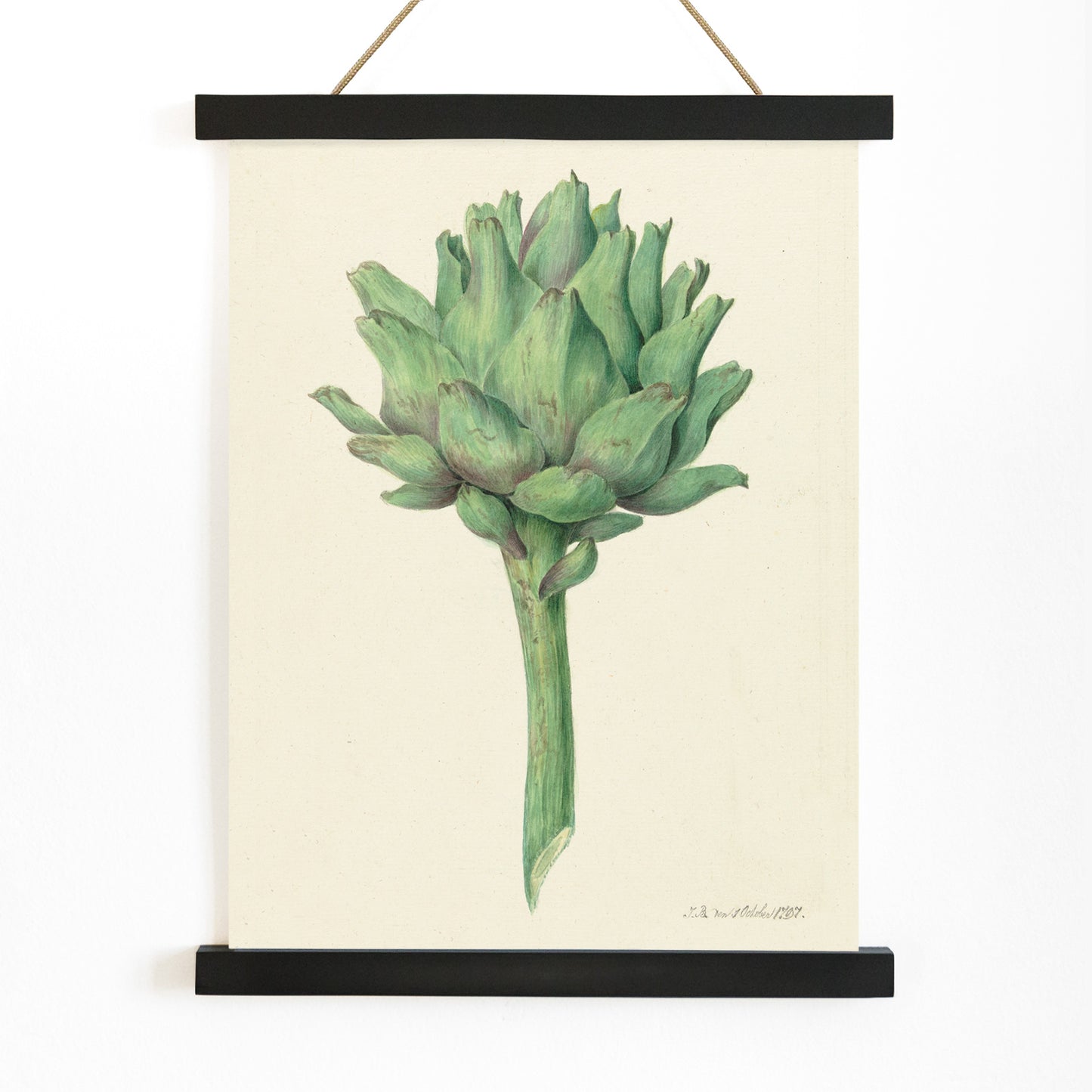
Created in 1830, this study of an artichoke plant emerged during a period when botanical illustration was flourishing as both a scientific and cultural pursuit. The artichoke, long cultivated in Mediterranean regions, was a familiar subject in European kitchens and gardens, making it an ideal candidate for educational and decorative prints.
This artwork represents the nineteenth-century belief that everyday plants deserved careful study and artistic attention. It fits naturally within collections of botanical prints, serving as a visual record of both culinary and horticultural heritage. For those interested in the intersection of science and art, it also complements selections from our science collection.
Style & Characteristics
The composition features a single artichoke plant, rendered with meticulous linework and subtle shading that highlights the structure of the bracts and leaves. The open background ensures the plant is the sole focus, allowing viewers to appreciate its form and detail.
A restrained palette of natural greens and muted beige creates a calm, contemplative mood. The illustration’s clarity and balance are hallmarks of early scientific prints, while the gentle modeling and soft paper tone lend it an understated elegance suitable for display.
In Interior Design
This vintage botanical print is especially suited to kitchens and dining areas, where its subject matter brings a touch of culinary history. It also works well in home offices or reading nooks, offering a quiet nod to natural science.
Pair it with other green toned posters or classic botanical prints for a cohesive gallery wall. Its neutral tones and refined style make it adaptable to both modern and traditional interiors.