


You may also like
-

Avocado (Persea) Poster
Amanda Almira Newton · 1916 · Detailed avocado botanical print featuring ripe fruit halves and glossy green leaves
Poster from €9 · Framed from €16
-

Avocado Persea Poster
Amanda Almira Newton · 1916 · Refined avocado botanical print with luminous green skins and a softly painted cut fruit
Poster from €9 · Framed from €16
-

Avocado (Persea) Poster
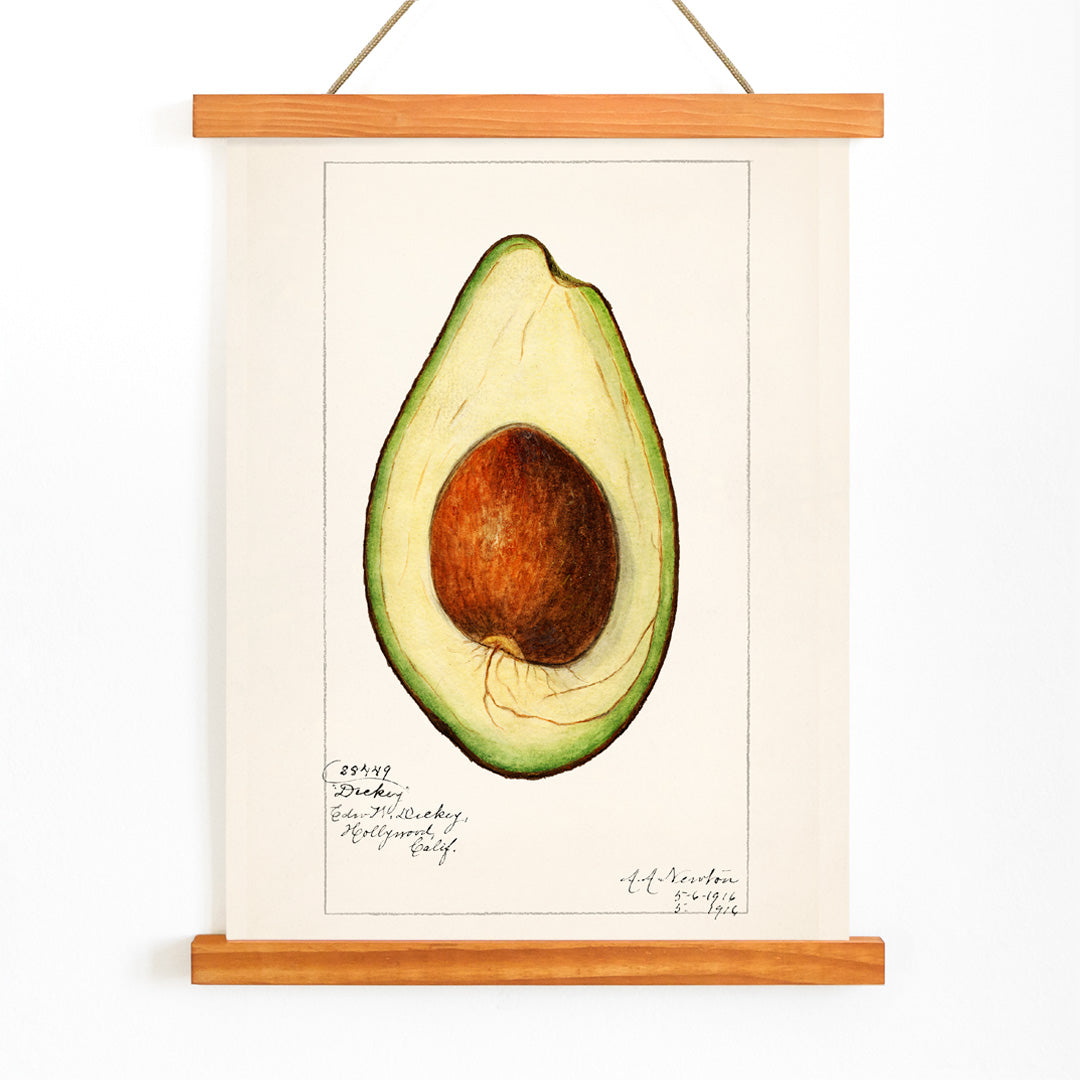
Amanda Almira Newton · 1916 · Refined avocado botanical print with green fruit and a cut half revealing the pit
Poster from €9 · Framed from €16
-

Prunus Persica Poster
Amanda Almira Newton · 1911 · Delicate peach botanical print with ripening fruit and soft leaves on white ground
Poster from €9 · Framed from €16


-

"Very nice Posters. The quality is amazing and we received it very quickly !"
-

"A shop to visit absolutely. Huge selection of posters. We spent more than an hour there !"
-

"Perfect to find gift. Price are very good. An they can frame and pack it on site"
About the Artist
Amanda Almira Newton was a prominent botanical illustrator whose work is closely associated with early twentieth-century American scientific documentation, especially within the USDA's efforts to catalog fruit and plant varieties. Her illustrations are celebrated for their clarity and accuracy, bridging the gap between scientific study and visual appeal.
Collectors value Newton's calm precision and her focus on everyday edible plants. Discover more of her work in the Amanda Almira Newton collection and explore additional nature-inspired pieces in our botanical prints selection.
The Artwork
This 1916 illustration of the avocado, Persea americana, was created during a time when agricultural institutions were developing visual references to support the spread of horticultural knowledge. Such botanical plates served as essential tools for growers and scientists, providing standardized records for identification and education across regions.
The artwork reflects the avocado's growing importance in American agriculture, capturing its unique characteristics for both scientific and culinary audiences. By documenting the fruit in detail, Newton contributed to the preservation and dissemination of knowledge about this now-iconic ingredient.
Style & Characteristics
The composition features a whole avocado alongside a halved specimen that reveals the large seed and creamy interior, with a sprig of glossy green leaves for botanical context. Newton employs fine linework and subtle shading to convey texture and form, while the open, neutral background enhances the clarity of the subject.
The color palette is dominated by natural greens and yellow-greens, contrasted with warm brown tones in the seed and stem. The overall effect is fresh and orderly, making this a refined botanical print that balances scientific accuracy with visual elegance.
In Interior Design
This avocado botanical print is well-suited for kitchens, dining spaces, or home offices where a touch of nature and food heritage is desired. Its clean composition complements mid-century modern, Scandinavian, or contemporary interiors, and it pairs beautifully with ceramics, wood, and linen textures.
For harmonious styling, echo the greens with sage or olive accents, and balance the warm seed tones with beige or light oak. Combine it with other kitchen wall art or integrate it into a curated botanical gallery for a cohesive look.