


You may also like
-

Asclepias Syriaca Poster
Karl Blossfeldt · 1928 · Sculptural black-and-white milkweed print highlighting geometric buds against a clean studio background
Poster from €9 · Framed from €16
-

Acanthus mollis Poster
Karl Blossfeldt · 1928 · Sculptural acanthus print with sharp monochrome detail and museum like calm
Poster from €9 · Framed from €16
-

Cobea scandens Poster
Karl Blossfeldt · 1928 · Sculptural Mexican ivy print with crisp monochrome stems and curling tendrils
Poster from €9 · Framed from €16
-

Phacelia tanacetifolia Poster
Karl Blossfeldt · 1928 · Sculptural Phacelia study art print with crisp monochrome detail and rhythmic curves
Poster from €9 · Framed from €16


-

"Very nice Posters. The quality is amazing and we received it very quickly !"
-

"A shop to visit absolutely. Huge selection of posters. We spent more than an hour there !"
-

"Perfect to find gift. Price are very good. An they can frame and pack it on site"
About the Artist
Karl Blossfeldt was a German photographer renowned for his striking close-up studies of plants. Initially trained as a sculptor and modeler, Blossfeldt taught at the Berlin School of the Museum of Decorative Arts, where he developed a unique approach to botanical photography. His work bridged the gap between scientific observation and artistic expression, inspiring generations of artists and designers.
His influential book Urformen der Kunst, published in 1928, became a cornerstone of the New Objectivity movement. Blossfeldt's photographs, celebrated in vintage photography prints, continue to resonate with those interested in the intersection of nature and design.
The Artwork
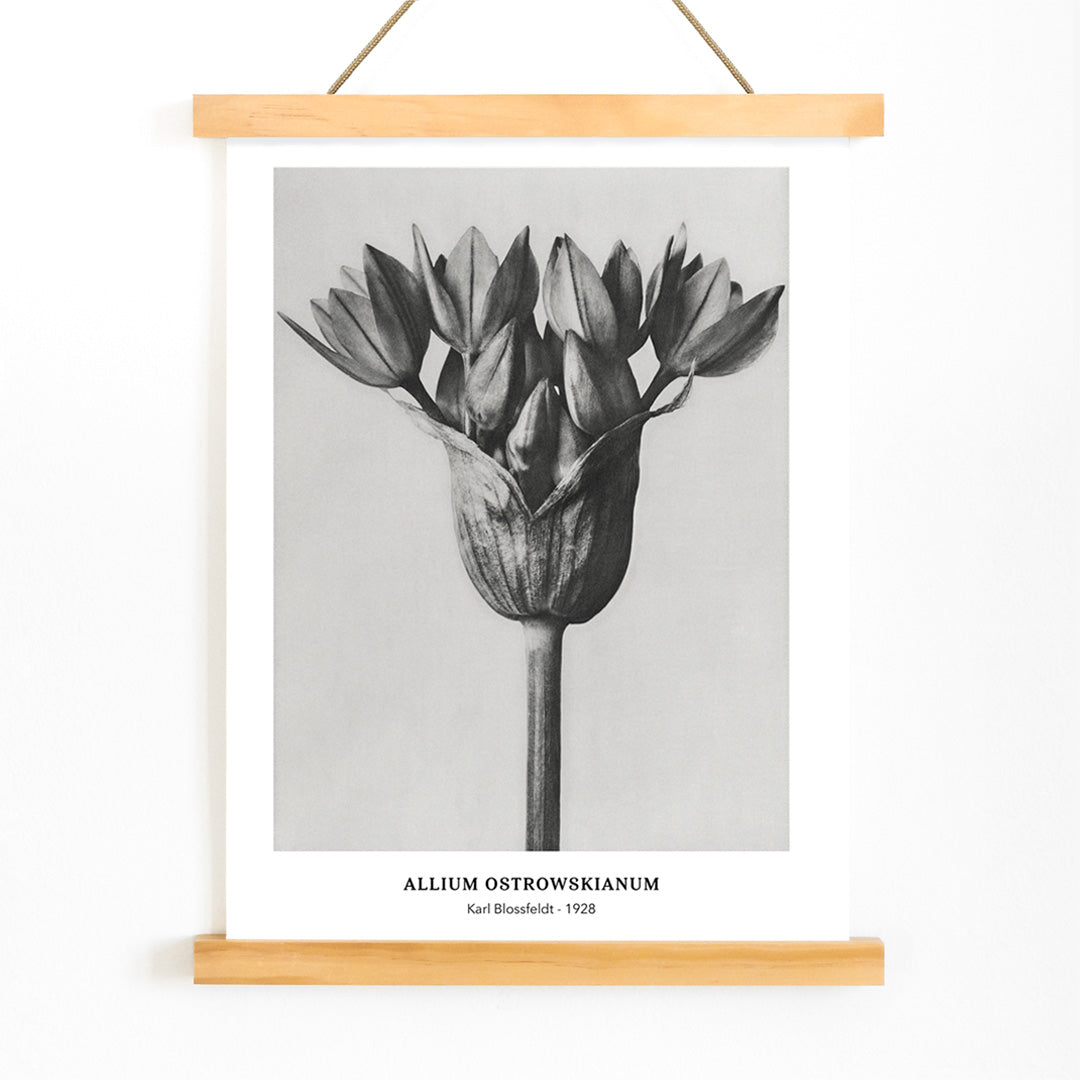
Created during the late 1920s, this photograph of Allium Ostrowskianum reflects a period when artists and designers sought order and clarity in response to the turbulence of postwar Europe. Blossfeldt's intention was to provide visual resources for artisans, highlighting the inherent structure and repetitive patterns found in nature.
By presenting the Allium as a subject of study rather than sentiment, Blossfeldt emphasized the plant's architectural qualities. This approach aligned with the modernist ethos of the Weimar era, where natural forms were examined for their potential to inspire new directions in art, ornamentation, and design.
Style & Characteristics
This black and white photograph features the Allium sharply isolated against a neutral background, drawing attention to the plant's spherical flower head and slender stem. The image is characterized by crisp focus, balanced lighting, and a full range of tonal values from deep black to soft grey.
The composition is frontal and symmetrical, lending the subject a sense of quiet monumentality. The photograph's minimalist presentation and sculptural clarity make it a compelling example of early modern botanical photography, appealing to admirers of black and white wall art and botanical prints.
In Interior Design
This fine art print serves as a subtle yet sophisticated focal point in contemporary interiors. Its monochrome palette harmonizes with minimalist spaces, complementing white walls, pale woods, or industrial materials like concrete and steel.
Ideal for living rooms, studies, or creative workspaces, the print introduces a sense of order and calm. Its timeless botanical subject matter also integrates seamlessly into gallery walls or as a standalone piece in bedrooms and kitchens, offering a quiet celebration of natural form.