


You may also like
-

Georgia O'Keeffe - Hips Poster
Alfred Stieglitz · 1918 · Intimate modernist nude print with sculptural cropping and velvety black-and-white tones
Poster from €9 · Framed from €16
-

Georgia O'Keeffe - Breasts Poster
Alfred Stieglitz · 1919 · Intimate black and white nude poster with sculptural curves and soft studio light
Poster from €9 · Framed from €16
-

Georgia O'Keeffe - Neck Poster
Alfred Stieglitz · 1921 · Intimate black and white photo art print cropping neck and jaw into sculptural abstraction
Poster from €9 · Framed from €16
-

Rebecca Salsbury Strand Poster
Alfred Stieglitz · 1922 · Intimate black and white portrait art print with quiet modernist intensity
Poster from €9 · Framed from €16


-

"Very nice Posters. The quality is amazing and we received it very quickly !"
-

"A shop to visit absolutely. Huge selection of posters. We spent more than an hour there !"
-

"Perfect to find gift. Price are very good. An they can frame and pack it on site"
About the Artist
Alfred Stieglitz was a pioneering American photographer and influential gallerist who played a central role in the development of early modernism. Through his leadership at the 291 gallery, he introduced American audiences to avant-garde art and championed photography as a legitimate fine art form. Stieglitz’s collaborations and personal relationships, especially with Georgia O’Keeffe, shaped the direction of twentieth-century visual culture.
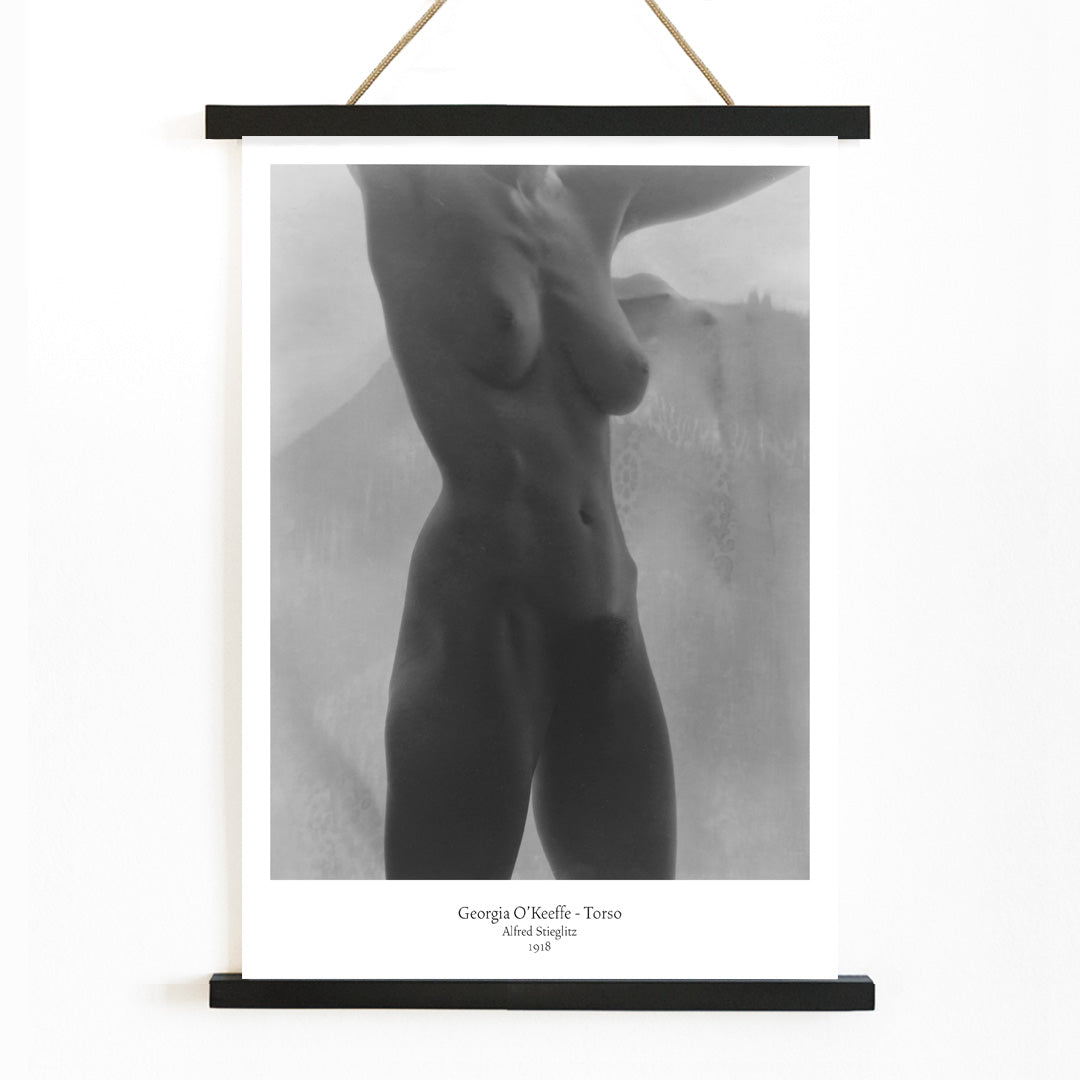
This 1918 photograph marks a period when Stieglitz was deeply engaged in exploring the expressive potential of the camera. His portraits of O’Keeffe are celebrated not only for their intimacy but also for their contribution to the recognition of photography as an art equal to painting or sculpture.
The Artwork
Created in 1918, this image is part of Stieglitz’s renowned series documenting Georgia O’Keeffe during the emergence of American modernism. The series was groundbreaking in its approach, using the camera to convey psychological depth and formal abstraction. Rather than serving as private keepsakes, these works were intended to demonstrate the artistic possibilities of photography and to challenge traditional notions of portraiture.
The photograph captures a moment when the human form was being reconsidered as a modern subject, emphasizing the relationship between artist and muse. It stands as a testament to the creative dialogue that defined Stieglitz and O’Keeffe’s partnership.
Style & Characteristics
This black and white photograph presents a tightly cropped view of a torso, focusing on the elegant curves and the interplay of shadow and light across the skin. The composition minimizes extraneous detail, drawing attention to pure form and texture—hallmarks of modernist photography.
Subtle gradations of grey and deep blacks evoke a contemplative, intimate mood. The minimalist approach and sculptural lighting make this piece resonate with those who appreciate vintage photography and black and white prints, offering a study in both tenderness and strength.
In Interior Design
As a vintage print, this work lends a sense of quiet sophistication to bedrooms, dressing areas, or studies where calm and simplicity are valued. Its monochrome palette pairs effortlessly with white walls, dark textiles, and natural wood, complementing modern, Scandinavian, or gallery-inspired interiors.
The intimate subject matter makes it ideal for curated personal spaces or refined erotic art posters collections, where subtlety and emotional resonance are prized. Framed simply, it anchors a gallery wall without overpowering the room.