


You may also like
-

Asclepias Syriaca Poster
Karl Blossfeldt · 1928 · Sculptural black-and-white milkweed print highlighting geometric buds against a clean studio background
Poster from €9 · Framed from €16
-

Allium Ostroroskianum Poster
Karl Blossfeldt · 1928 · Modernist botanical print revealing Allium structure in crisp black-and-white detail
Poster from €9 · Framed from €16
-

Acanthus mollis Poster
Karl Blossfeldt · 1928 · Sculptural acanthus print with sharp monochrome detail and museum like calm
Poster from €9 · Framed from €16
-

Flowers Poster 1 Poster
Karl Blossfeldt · 1928 · Sculptural flower print in crisp black and white with laboratory clarity
Poster from €9 · Framed from €16


-

"Very nice Posters. The quality is amazing and we received it very quickly !"
-

"A shop to visit absolutely. Huge selection of posters. We spent more than an hour there !"
-

"Perfect to find gift. Price are very good. An they can frame and pack it on site"
About the Artist
Karl Blossfeldt was a German photographer and educator whose pioneering plant portraits helped shape the New Objectivity movement in Weimar-era photography. Based in Berlin, Blossfeldt used custom-made cameras to capture the intricate forms of plants, aiming to reveal the underlying structures that connect nature and design.
His work gained international recognition with the 1928 publication Urformen der Kunst, which presented botanical forms as inspiration for artists, architects, and designers. Blossfeldt’s approach elevated plant studies from scientific documentation to fine art, and his photographs remain influential for those interested in the intersection of nature and modern aesthetics. Discover more botanical prints and photography prints in our curated collections.
The Artwork
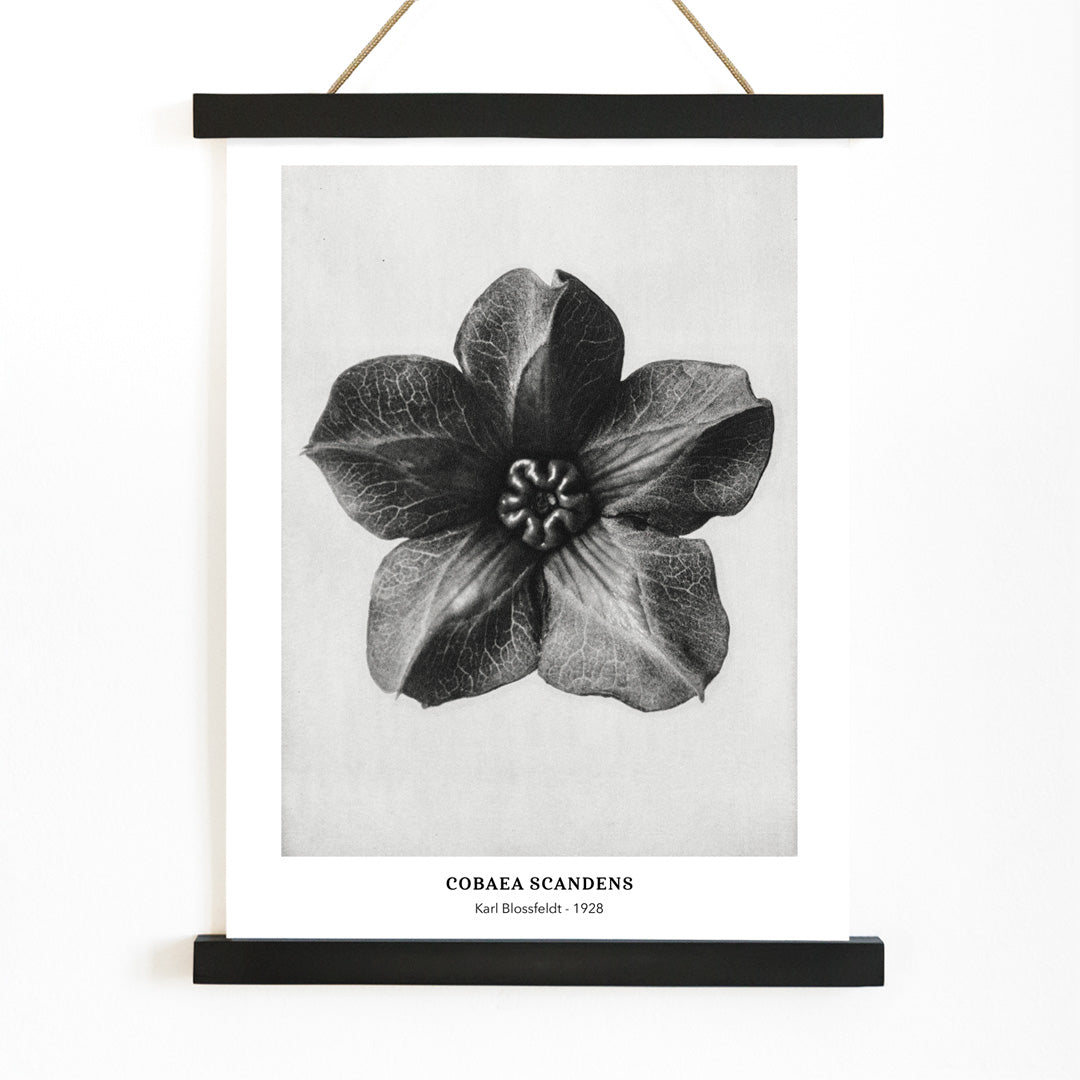
This photograph of Cobea scandens, or Mexican ivy, was created as part of Blossfeldt’s effort to demonstrate the architectural logic found in plant life. Rather than serving as a simple botanical record, the image was intended to inspire artists and designers by highlighting the repetitive patterns and geometric forms present in nature.
Produced during a period when modernist thinkers sought clarity and order, this work exemplifies how photography became a vital reference for creative disciplines. Blossfeldt’s studies were used in classrooms and studios, bridging the gap between scientific observation and artistic inspiration.
Style & Characteristics
The photograph features a single Mexican ivy stem, isolated against a pale, neutral background. The vertical composition draws the eye upward, while sharply focused details reveal curling tendrils and clustered nodes that evoke engineered structures.
Blossfeldt’s use of black, white, and soft grey tones creates a crisp, sculptural effect. The controlled lighting and high contrast emphasize texture and form, resulting in an image that feels both analytical and elegant. The mood is serene and contemplative, making this print a striking example of black and white botanical photography.
In Interior Design
This art print complements modern and minimalist interiors, fitting seamlessly into living rooms, studies, or creative workspaces. Its monochrome palette pairs well with light or dark woods, concrete, and neutral walls, while the botanical subject adds organic interest without overwhelming the space.
For a cohesive gallery wall, combine this piece with geometric abstractions or other plant studies in matching frames. To explore similar aesthetics, browse our black and white wall art collection for additional inspiration.