


You may also like
-

Nami–chi–dori Poster
Kazumasa Ogawa · 1896 · Elegant wave and plover poster with airy negative space and gentle coastal rhythm
Poster from €9 · Framed from €16
-

Lily Poster
Kazumasa Ogawa · 1896 · Delicate lily botanical print with hand-tinted petals and soft neutral background
Poster from €9 · Framed from €16
-

Asa–dsuma–bune Poster
Kazumasa Ogawa · 1896 · Hand-colored floral print featuring scarlet blossoms and crisp leaves against a quiet ground
Poster from €9 · Framed from €16
-

Lilies Poster
Kazumasa Ogawa · 1896 · Hand-colored lily vintage print with luminous whites and gentle pastel greens
Poster from €9 · Framed from €16


-

"Very nice Posters. The quality is amazing and we received it very quickly !"
-

"A shop to visit absolutely. Huge selection of posters. We spent more than an hour there !"
-

"Perfect to find gift. Price are very good. An they can frame and pack it on site"
About the Artist
Kazumasa Ogawa was a pioneering figure in Meiji era Japanese photography, renowned for his mastery of collotype printing and refined hand-coloring techniques. As both a photographer and publisher, Ogawa played a crucial role in elevating photographic reproduction to an art form appreciated for its subtlety and craftsmanship.
His botanical studies, including this iris, reflect a period when Japan was embracing modernity while honoring traditional subjects. Ogawa’s work bridged scientific documentation and artistic expression, making his prints highly valued among collectors of vintage Japanese art.
The Artwork
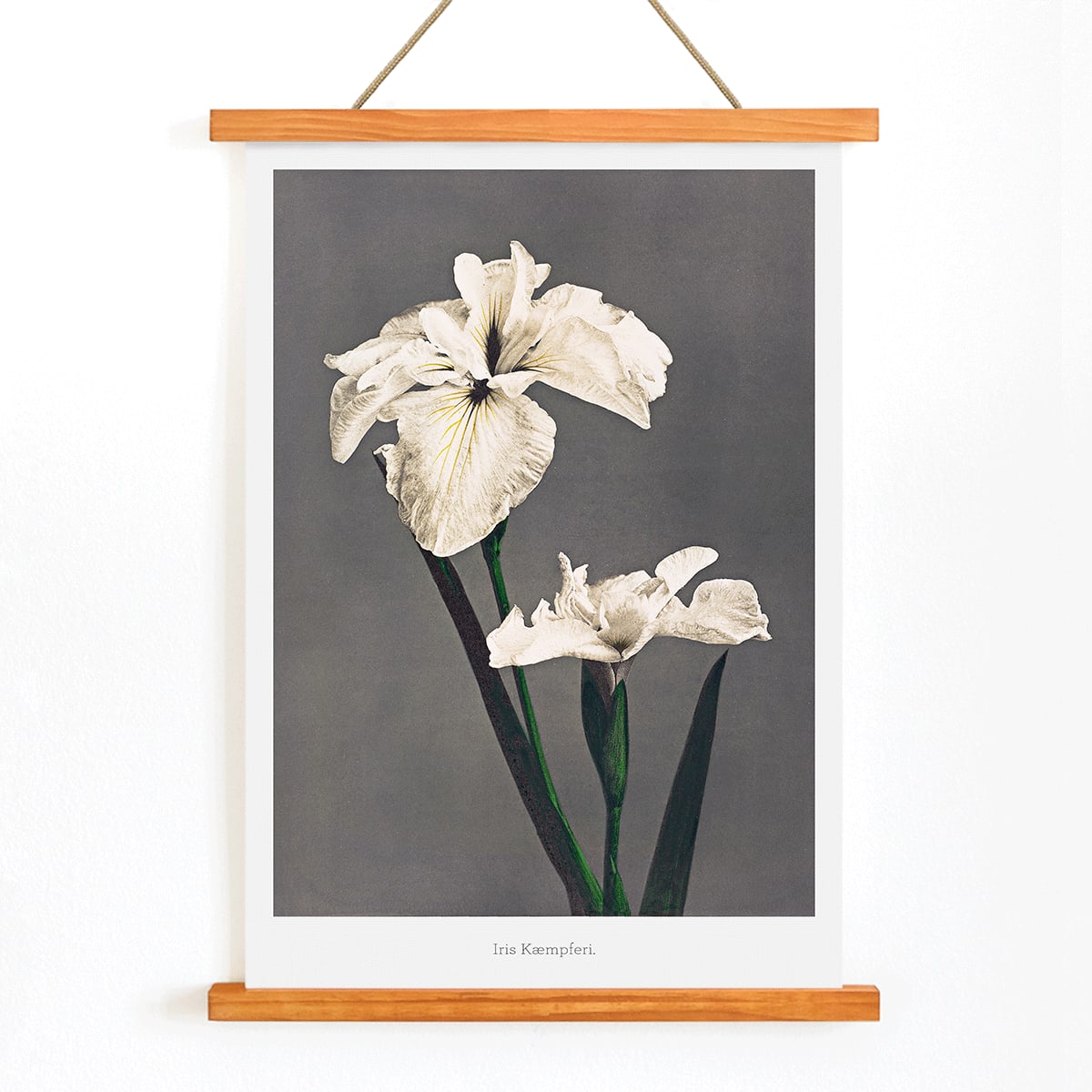
This depiction of Iris Kæmpferi was created during a time when botanical illustration served not only as scientific reference but also as a symbol of cultural sophistication. In the late nineteenth century, such images were prized for their ability to bring the beauty of nature into private homes and study rooms, reflecting the Meiji era’s fascination with both progress and heritage.
Ogawa’s choice of subject and medium underscores a moment of transition in Japanese art, where traditional floral motifs were reinterpreted through innovative photographic processes. The print embodies the spirit of an era that introduced Japanese aesthetics to a global audience.
Style & Characteristics
The artwork features a graceful white iris with elongated green leaves, set against a pale, uncluttered background that highlights the plant’s elegant form. The composition feels airy and balanced, with the flower’s soft petals rendered in delicate shades of white and subtle hints of grey, while the leaves offer gentle green tones.
Hand-colored collotype printing lends the image a tactile, nuanced quality, with crisp outlines and smooth tonal transitions. This serene botanical print appeals to lovers of botanical wall art, pairs well with vintage photography prints, and enhances interiors inspired by Japanese decor.
In Interior Design
This botanical print brings a sense of tranquility to bedrooms, reading nooks, or hallways, where its open composition provides a restful visual anchor. It works beautifully as part of a gallery wall or as a standalone piece above a console or bedside table.
Pair it with soft whites, muted greys, natural wood, and gentle greens for a Japandi or Scandinavian-inspired space. Its understated elegance also complements classic-art interiors, offering a refined botanical accent that harmonizes with a range of decor styles.