


You may also like
-

Lupine flowers Poster
Alida Withoos · 1695 · Delicate lupine botanical print with airy stems and soft pink blooms
Poster from €9 · Framed from €16
-

Two lilies Poster
Anton Weiss · 2006 · Monochrome lily botanical print with two blossoms and elegant stems on warm beige
Poster from €9 · Framed from €16
-

Flowering hosta Poster
Ohara Koson · 1930 · Serene Japanese botanical print of flowering hosta with broad green leaves and soft purple bells
Poster from €9 · Framed from €16
-

Smilacina stellata Poster
Pierre-Joseph Redouté · 1805 · Delicate botanical print of Smilacina stellata with airy white blossoms and slender leaves
Poster from €9 · Framed from €16


-

"Very nice Posters. The quality is amazing and we received it very quickly !"
-

"A shop to visit absolutely. Huge selection of posters. We spent more than an hour there !"
-

"Perfect to find gift. Price are very good. An they can frame and pack it on site"
About the Artist
Maria Geertruida Barbiers-Snabilié was a Dutch artist renowned for her detailed studies of flowers, bridging the worlds of fine art and botanical illustration. Active in the early 19th century, she was part of a Dutch tradition that valued both scientific observation and artistic refinement. Her works were often collected by enthusiasts interested in both the beauty and the taxonomy of plants, reflecting a period when botanical art served educational as well as decorative purposes.
This 1815 sheet embodies her careful approach, offering a glimpse into an era when artists and botanists collaborated to document the natural world for collectors, scholars, and garden lovers alike.
The Artwork
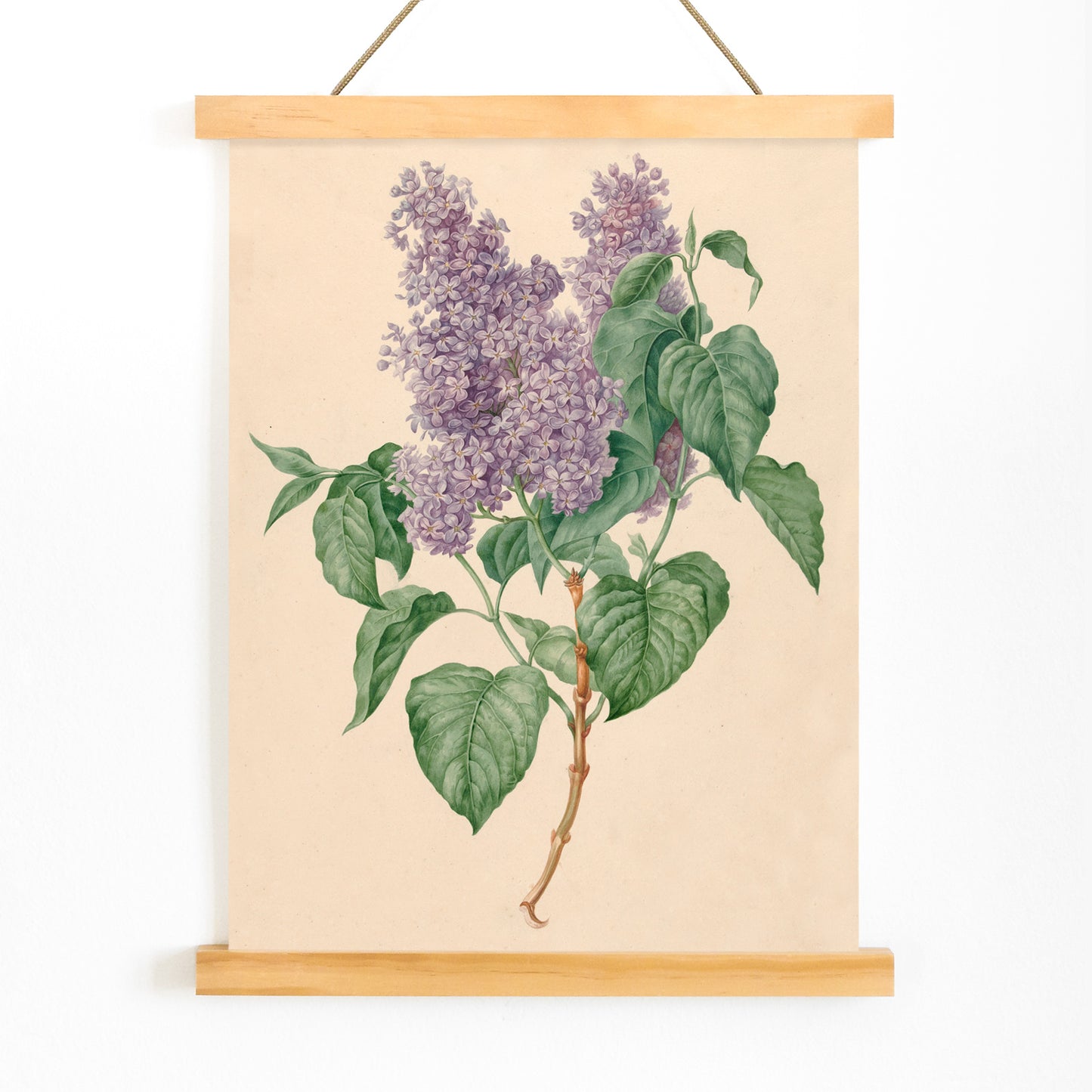
Purple Lilacs was created during a time when European fascination with horticulture and plant collecting was at its peak. Following the Enlightenment, gardens and botanical albums became symbols of knowledge and status, and plants like the lilac were prized for their rarity and fleeting beauty. This artwork preserves the ephemeral bloom of the lilac, transforming it into a lasting visual record that could be studied and admired long after the season had passed.
The subject matter also evokes themes of spring renewal and cultivated elegance, making it a natural complement to other botanical prints and classic nature-inspired art. For those who appreciate subtle color, it also pairs well with purple tone prints in a curated collection.
Style & Characteristics
The composition features a single lilac stem with clustered blossoms and broad, veined leaves, rendered with the clarity of a botanical study. Delicate linework defines the structure, while gentle washes of purple and green create a sense of freshness and light. The warm beige paper provides a soft, neutral background that enhances the plant’s presence and gives the print an airy, serene mood.
The restrained palette of lilac purples and leafy greens, set against the subtle warmth of the paper, makes this piece ideal for interiors seeking a touch of nature without overwhelming color. Its simplicity and elegance are hallmarks of early 19th-century botanical illustration.
In Interior Design
This botanical print is well suited to bedrooms, reading nooks, hallways, or dining spaces where a gentle, natural accent is desired. Its vintage character complements classic, cottage, and Scandinavian interiors, and it can also offer a calming note in more contemporary settings when framed simply. It works beautifully as part of a gallery wall featuring florals and still lifes.
Pair it with warm whites, linen beige, sage green, or light wood for a harmonious palette, or echo the lilac tones with soft textiles. A natural wood or ivory mat from our frames collection will highlight the artwork’s subtle color and vintage charm.