


You may also like
-

Morning at Dotonbori Poster
Kawase Hasui · 1935 · Tranquil riverside morning art print with soft reflections and quiet boats
Poster from €9 · Framed from €16
-

Early Autumn in Urayasu Poster
Kawase Hasui · 1931 · Serene waterfront poster with dusky sky, quiet village silhouettes, and still reflections
Poster from €9 · Framed from €16
-

Morning in Beppu Poster
Kawase Hasui · 1937 · Quiet harbor at sunrise art print with boats, mist, and luminous reflections
Poster from €9 · Framed from €16
-

Ukiyo e Harbour Sunset Poster
Kawase Hasui · 1935 · Serene harbour sunset art print with dark silhouettes and glowing sky over calm water
Poster from €9 · Framed from €16


-

"Very nice Posters. The quality is amazing and we received it very quickly !"
-

"A shop to visit absolutely. Huge selection of posters. We spent more than an hour there !"
-

"Perfect to find gift. Price are very good. An they can frame and pack it on site"
About the Artist
Kawase Hasui was a central figure in the shin hanga movement, which revitalized Japanese woodblock printing in the early twentieth century by blending traditional techniques with modern sensibilities. Working in collaboration with master carvers and printers, Hasui became renowned for his evocative landscapes that capture the quiet poetry of everyday scenes. His works are celebrated for their ability to convey a sense of place and mood, resonating with viewers both in Japan and abroad.
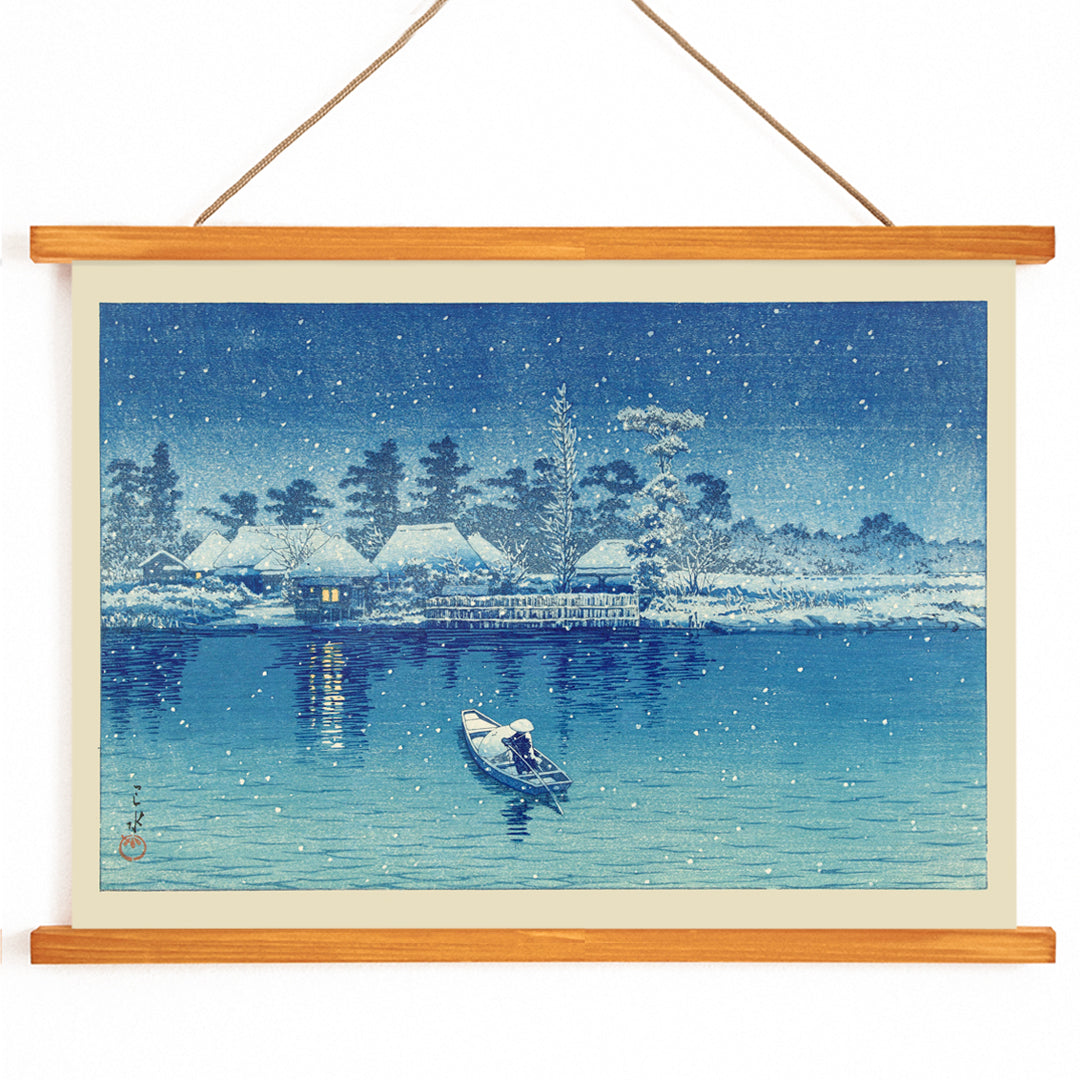
This 1930 depiction of Ushibori reflects Hasui’s fascination with tranquil, lesser-known locales rather than famous landmarks. Created during a period of rapid modernization in Japan, his prints offered a contemplative counterbalance, inviting viewers to appreciate the enduring beauty of ordinary settings. For more works by Hasui, browse the Kawase Hasui collection or discover related pieces in oriental art.
The Artwork
Ushibori captures a moment of winter stillness in a riverside town, where the world seems hushed beneath a blanket of snow. The print invites reflection on the quiet rhythms of daily life, emphasizing the emotional resonance of place over spectacle. Hasui’s choice to focus on an unassuming landscape speaks to his appreciation for the subtle beauty found in everyday environments, offering viewers a meditative experience rooted in the Japanese tradition of mono no aware—the gentle awareness of impermanence.
Style & Characteristics
The composition centers on a calm river bordered by snow-laden banks, with a cluster of distant rooftops and bare trees providing gentle structure. Cool blue tones and crisp whites dominate the palette, evoking the chill and clarity of winter. Deep navy and charcoal accents define the shoreline and reflections, while soft gradations of color suggest mist and fading daylight. Hasui’s precise linework and delicate color transitions are hallmarks of the shin hanga style, resulting in a serene and atmospheric winter landscape print.
In Interior Design
This art print brings a sense of calm and spaciousness to interiors, making it well-suited for bedrooms, reading corners, or tranquil entryways. Its restrained color scheme pairs beautifully with natural materials like pale wood, linen, and stone, and complements minimalist or Japandi-inspired decor. For a harmonious look, consider echoing the print’s blues with ceramics or textiles, and explore more options in blue wall art or find the perfect frame to complete your display.