


You may also like
-
Tomoe no yuki Poster
Kamisaka Sekka · 1909 · Quiet snowfall art print balancing bold black curves with generous beige negative space
Poster from €9 · Framed from €16
Regular price From €6,00Regular price -
Yoshino Poster
Kamisaka Sekka · 1909 · Serene Japanese landscape poster with abstract green and blue hills on warm beige
Poster from €9 · Framed from €16
Regular price From €6,00Regular price -
Mount Fuji Poster
Kamisaka Sekka · 1909 · Minimal Mount Fuji art print with calm blue tones and clean contours
Poster from €9 · Framed from €16
Regular price From €6,00Regular price -
Ryoson Poster
Kamisaka Sekka · 1909 · Serene seascape art print with stylized waves and a quiet coastal silhouette
Poster from €9 · Framed from €16
Regular price From €6,00Regular price


-

"Very nice Posters. The quality is amazing and we received it very quickly !"
-

"A shop to visit absolutely. Huge selection of posters. We spent more than an hour there !"
-

"Perfect to find gift. Price are very good. An they can frame and pack it on site"
About the Artist
Kamisaka Sekka was a Kyoto-based designer and painter who played a pivotal role in revitalizing the Rinpa school for a new era. His work seamlessly blended traditional Japanese aesthetics with the emerging tastes of the early 20th century, influencing both fine art and the decorative arts. Sekka’s design albums were widely circulated among artisans and collectors, helping to bridge the worlds of classical art and modern design.
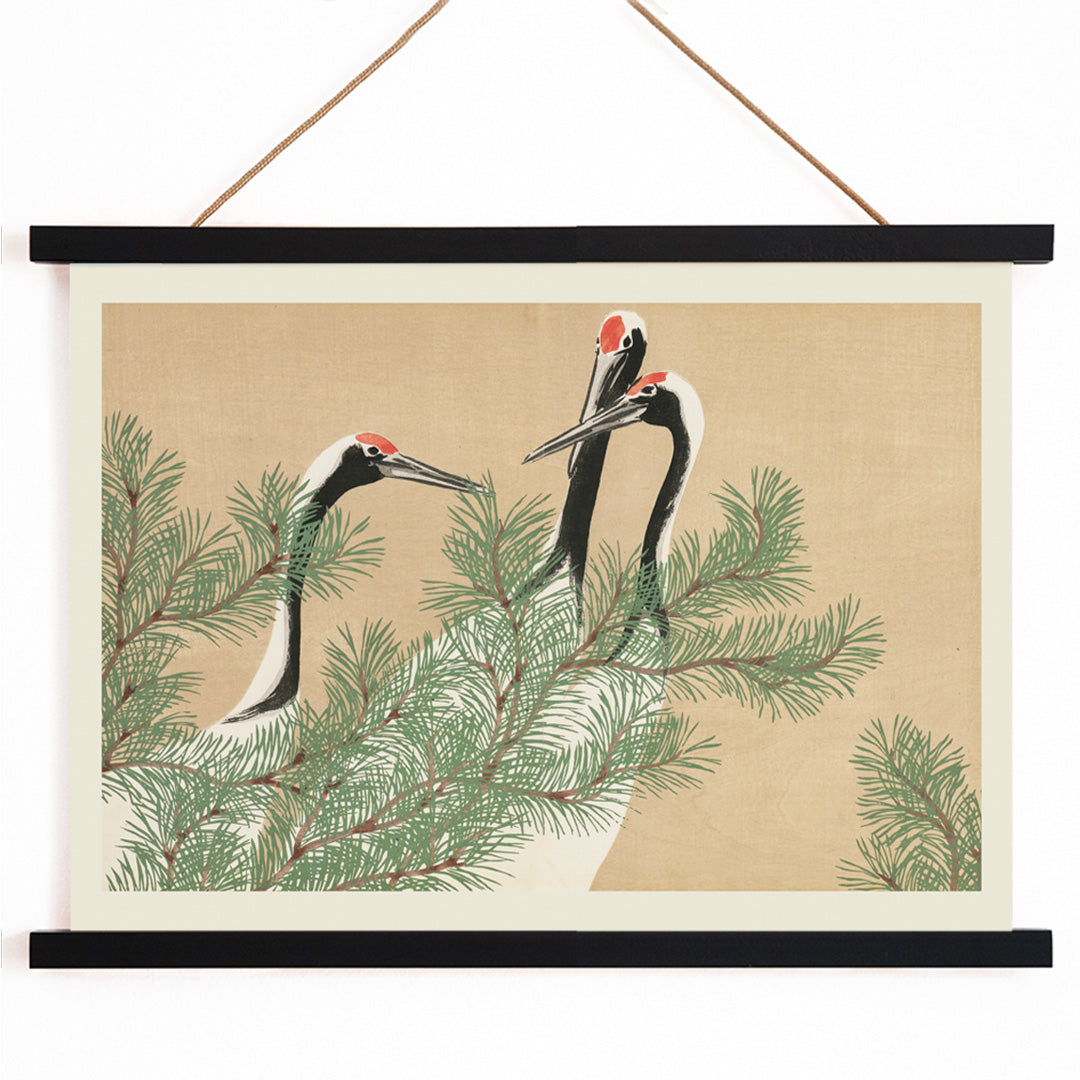
His legacy is marked by a refined approach that made classical motifs accessible and relevant for contemporary audiences. Sekka’s influence can be seen in the way Japanese visual culture adapted to modernity, particularly through works like this depiction of cranes and pine, which continue to resonate as symbols of good fortune and longevity.
The Artwork
Created in 1910, this artwork features cranes and pine branches—motifs deeply rooted in Japanese symbolism. Cranes are celebrated for representing longevity and fidelity, while pine trees are associated with endurance and steadfastness. The pairing of these elements reflects a wish for enduring happiness and well-being, themes that were especially meaningful during a period of cultural transition in Japan.
This piece was produced at a time when Japanese artists were reinterpreting traditional subjects for a society in flux, balancing respect for heritage with the appeal of modern design. The artwork stands as a testament to the enduring power of nature-inspired imagery in Japanese art.
Style & Characteristics
The composition is marked by simplified, elegant forms: cranes with sweeping necks and wings, set against a soft, neutral background. Stylized pine needles and branches add rhythmic accents, while touches of black and red highlight the birds’ features and bring visual contrast. Sekka’s use of flat color planes and graceful outlines is characteristic of the Rinpa style, emphasizing clarity and harmony over intricate detail.
The overall effect is tranquil and balanced, making this piece a striking example of Japanese graphic art. It appeals to those who appreciate Japanese-inspired wall art and serene, nature-focused interiors, and pairs beautifully with other works from the beige tones or animal decorative art collections.
In Interior Design
This crane art print brings a sense of calm and refinement to living rooms, bedrooms, or studies. Its muted palette complements natural materials like wood and linen, fitting seamlessly into Japandi, minimalist, or modern-classic interiors.
For a harmonious look, combine it with neutral furnishings or layer it with other nature-themed prints. Framed simply, it becomes a subtle yet distinctive focal point in any space.