


You may also like
-
Acanthus mollis Poster
Karl Blossfeldt · 1928 · Sculptural acanthus print with sharp monochrome detail and museum like calm
Poster from €9 · Framed from €16
Regular price From €6,00Regular price -
Asclepias Syriaca Poster
Karl Blossfeldt · 1928 · Sculptural black-and-white milkweed print highlighting geometric buds against a clean studio background
Poster from €9 · Framed from €16
Regular price From €6,00Regular price -
Phacelia tanacetifolia Poster
Karl Blossfeldt · 1928 · Sculptural Phacelia study art print with crisp monochrome detail and rhythmic curves
Poster from €9 · Framed from €16
Regular price From €6,00Regular price -
Allium Ostroroskianum Poster
Karl Blossfeldt · 1928 · Modernist botanical print revealing Allium structure in crisp black-and-white detail
Poster from €9 · Framed from €16
Regular price From €6,00Regular price


-

"Very nice Posters. The quality is amazing and we received it very quickly !"
-

"A shop to visit absolutely. Huge selection of posters. We spent more than an hour there !"
-

"Perfect to find gift. Price are very good. An they can frame and pack it on site"
About the Artist
Karl Blossfeldt was a German photographer whose botanical studies became foundational to early 20th-century modernism. As both an artist and educator, Blossfeldt used photography to reveal the intricate forms and structures of plants, encouraging viewers to appreciate nature’s design in new ways.
His influential series, published in 1928, played a significant role in shaping the aesthetics of the New Objectivity movement and echoed Bauhaus principles of form and function. Blossfeldt’s work continues to inspire those interested in the intersection of natural history and design, and it is a highlight within our photography prints collection.
The Artwork
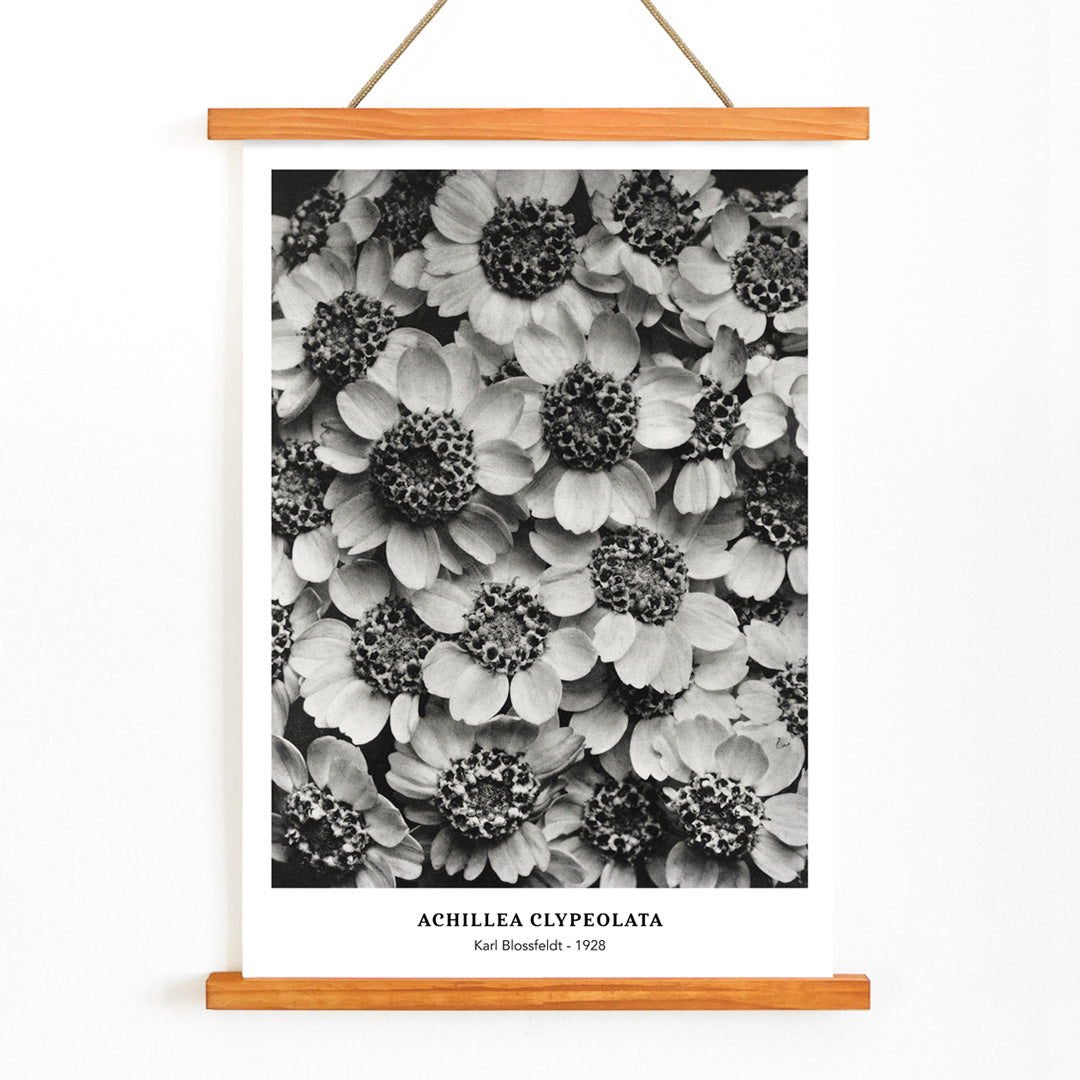
Achillea Clypeolata is part of Blossfeldt’s project to present plants as models of pure form and structure. Created during the interwar period, this photograph isolates the yarrow specimen, inviting viewers to study its repetition, symmetry, and organic architecture.
In 1928, such images resonated with artists, architects, and designers seeking inspiration from the natural world for modern ornamentation. This vintage botanical print served as both a reference and a poetic meditation on the beauty of natural forms, bridging scientific observation and artistic vision.
Style & Characteristics
The photograph is rendered in black, white, and subtle greys, with sharp focus that highlights the plant’s textures and contours. The Achillea is set against a clean, pale background, transforming its stems and clustered blossoms into striking graphic silhouettes and rhythmic curves.
The composition is frontal and balanced, conveying a sense of calm precision. This blend of scientific clarity and understated elegance makes it a distinctive choice among black and white art prints and appeals to admirers of minimalist botanical imagery.
In Interior Design
This print brings a sense of calm structure to living rooms, hallways, or home offices, complementing materials like warm wood, stone, linen, and matte black. Its monochrome palette is versatile for Scandinavian, Japandi, and modern interiors.
It also integrates seamlessly into a gallery wall with typographic or geometric works, especially within a botanical wall art arrangement. Framed with a wide white mat, it offers a refined, contemplative accent for sophisticated spaces.