


You may also like
-

Ernst Kirchner Exhibition Poster
Ernst Kirchner · 1910 · Expressionist nude exhibition poster with bold black outlines and vivid blue and red
Poster from €9 · Framed from €16
-

Female Artist Poster
Ernst Ludwig Kirchner · 1910 · Angular figure art print with bold black contours and high-contrast color fields
Poster from €9 · Framed from €16
-

Rose Fried Gallery Poster
José Guerrero · 1963 · Energetic abstract poster balancing black, red, and blue gestures on white space
Poster from €9 · Framed from €16
-

Auf Weiss II Poster
Wassily Kandinsky · 1923 · Dynamic geometric abstract poster on white with primary colors and crisp black lines
Poster from €9 · Framed from €16


-

"Very nice Posters. The quality is amazing and we received it very quickly !"
-

"A shop to visit absolutely. Huge selection of posters. We spent more than an hour there !"
-

"Perfect to find gift. Price are very good. An they can frame and pack it on site"
About the Artist
Ernst Kirchner was a pioneering figure of German Expressionism and cofounder of Die Bruecke, a group that sought to capture the intensity of modern life through bold artistic innovation. His work in painting, printmaking, and drawing was marked by a desire to express inner experience over external reality. During his Berlin years, especially from 1911 to 1915, Kirchner became fascinated by the city’s rapid transformation and the psychological effects of urban living, making him a central figure among famous artists of the early twentieth century.
Kirchner’s explorations of city life reflect the excitement and anxiety of an era defined by progress and upheaval, offering a vivid window into the spirit of prewar Berlin.
The Artwork
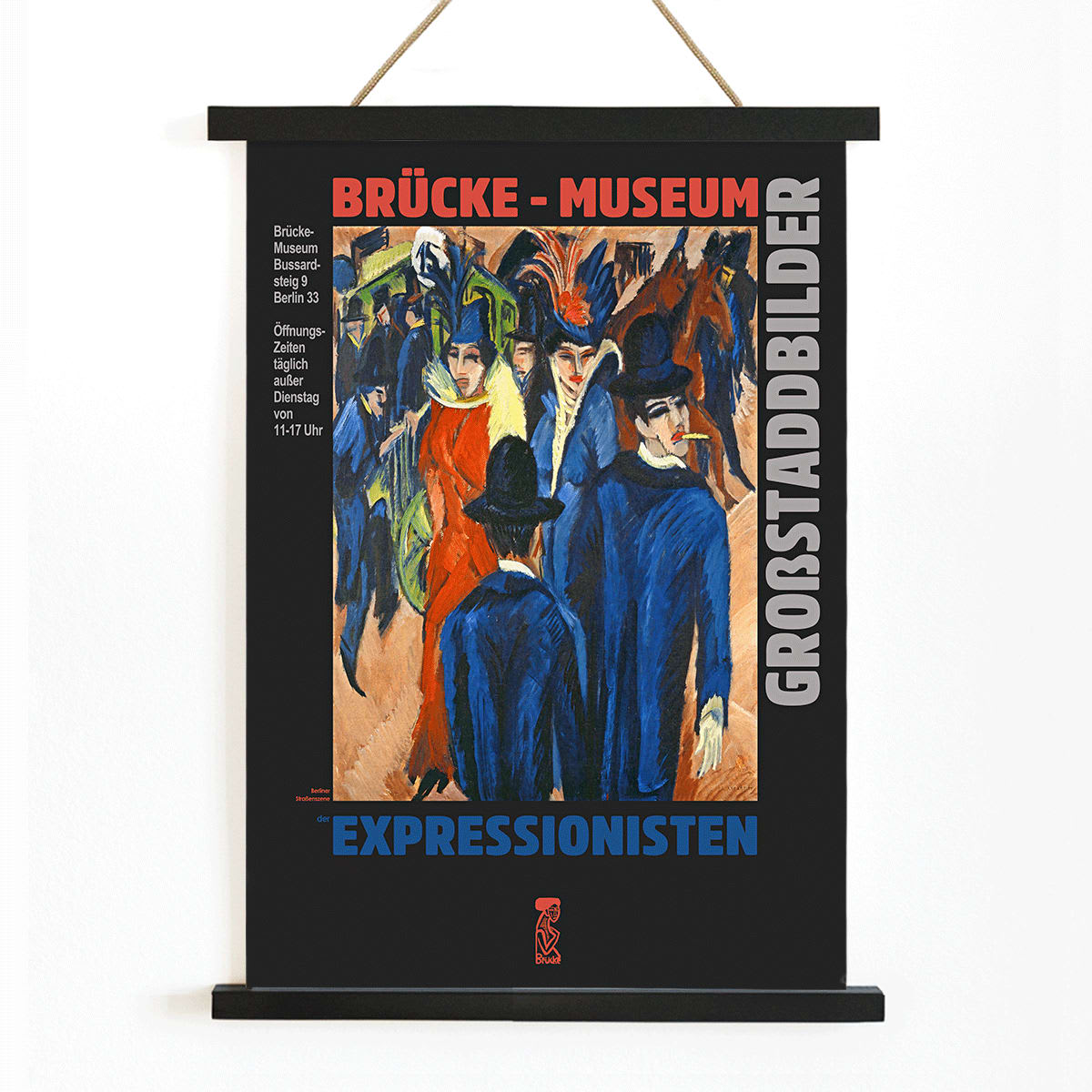
Berlin Street Scene is part of Kirchner’s celebrated series depicting the bustling avenues of Berlin just before World War I. Created at a time when the city was a symbol of modernity, the artwork captures the fleeting encounters and charged atmosphere of urban streets. It reflects the dynamic interplay of anonymity and spectacle, as fashionable figures move through a world of electric lights and shifting social boundaries. This piece embodies the tension and allure of city life during a period of profound change.
Style & Characteristics
The composition draws the viewer along a sharply tilted boulevard, where elongated figures and angular forms dominate the scene. Kirchner’s use of high-contrast blues, oranges, reds, greens, and deep blacks creates a striking visual rhythm, while strong outlines and simplified shapes heighten the sense of movement and energy. The mood is vibrant yet slightly uneasy, characteristic of Expressionist art, making this work a compelling choice for those interested in blue and abstract wall art with historical resonance.
In Interior Design
This Berlin Street Scene poster serves as a dramatic focal point in modern or eclectic interiors, especially in living rooms, hallways, or creative workspaces. Its bold colors and dynamic forms pair well with minimalist furnishings or can be contrasted with darker woods for a more atmospheric effect. The artwork complements curated vintage collections and adds a touch of urban sophistication to any space, resonating with collectors who appreciate early twentieth-century city imagery.